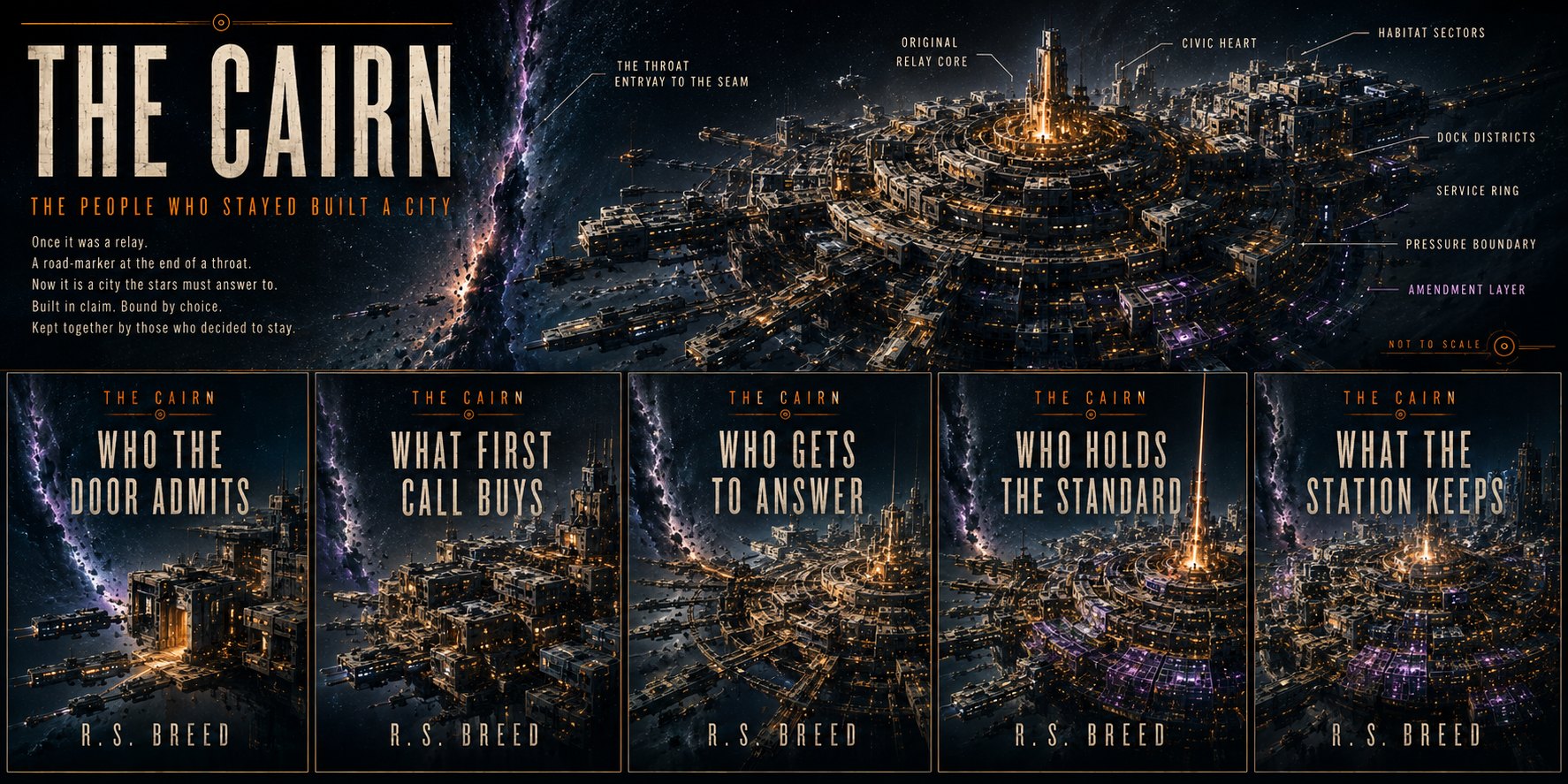
It was built as a relay. It became a city, because the people who reached it had nowhere else to be.
The Cairn is provisional — a relay at the edge of a damaged region of space, held together by a compact between governments that none of them expect to last, with eight thousand people living in sectors that were meant to be temporary. Then the culture stream that keeps one sector fed begins to fail, and the only replacement is aboard a transport that has gone long: a ship that has lived more time than its route allows, arriving with contradictory manifests, an exhausted crew and cargo that has altered on the way. Admitting the ship, its displaced people and its altered cargo is one decision — and nobody on the station has the authority to make it alone.
A station saga: five novels, one place, twenty-four years. Ships and crews rotate through; the Cairn stays, and accumulates — leases, grudges, precedents, laws written after they were needed, and a first generation born aboard who have never stood on a planet. Several kinds of people live, work, grieve and inherit one another's history in the same corridors, and none of them holds the whole truth. Each book is a complete novel.
For readers who want a place instead of a voyage — neighbours, leases, law and argument on a frontier station.
5 Books
0 available now
2318–2342
Timeline
The Cairn
Station
E. Kade
Administrator
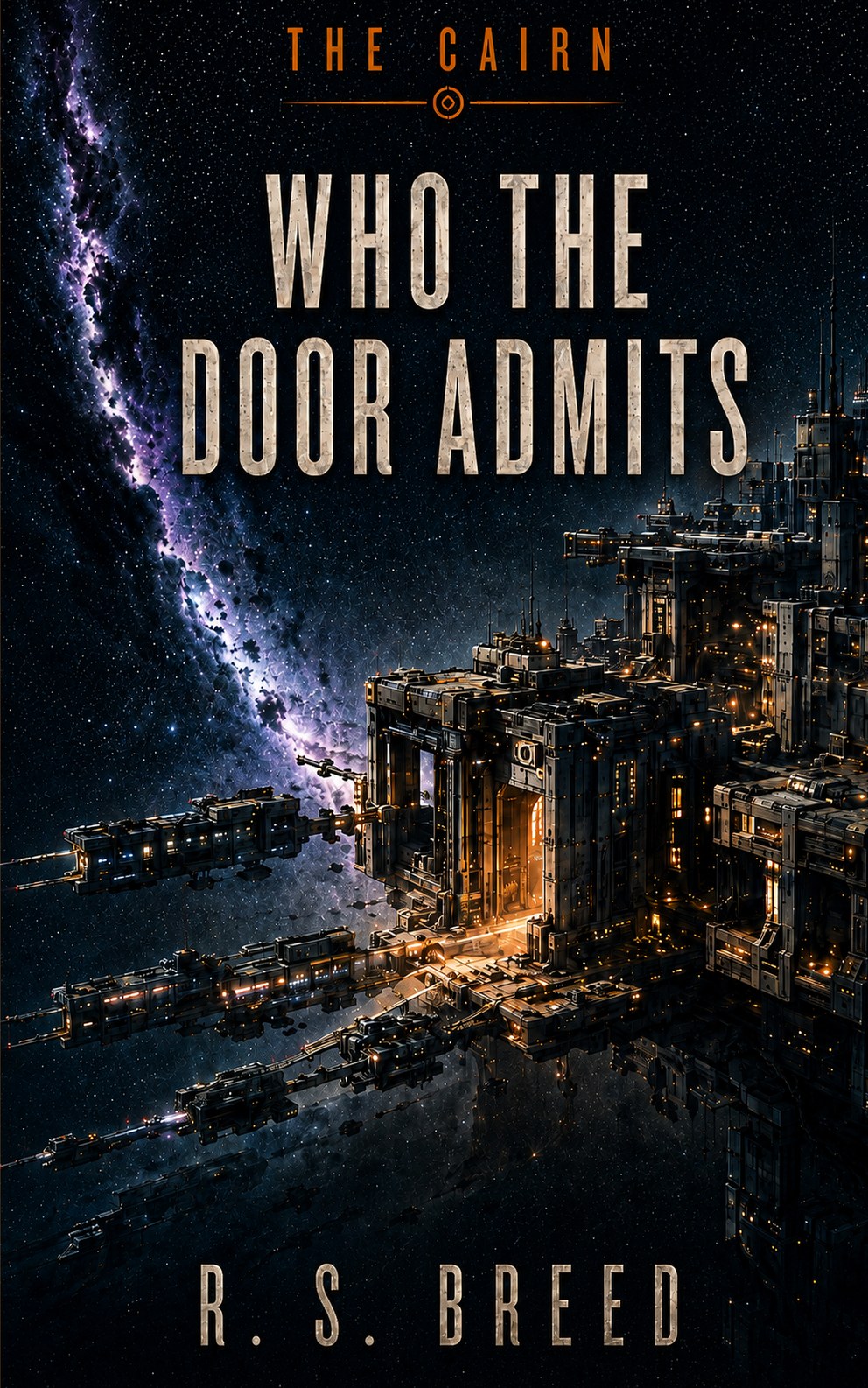
Book One: Who the Door Admits (2318)
A sector's food supply is failing, and the only replacement is aboard a transport that has gone long — contradictory manifests, an exhausted crew, a disputed command, cargo altered in transit. Admitting the ship, its displaced people and its cargo is one decision, taken by a provisional administration with no authority over the guns at its own throat. The Cairn stops being a relay and starts being responsible for whoever reaches its door.
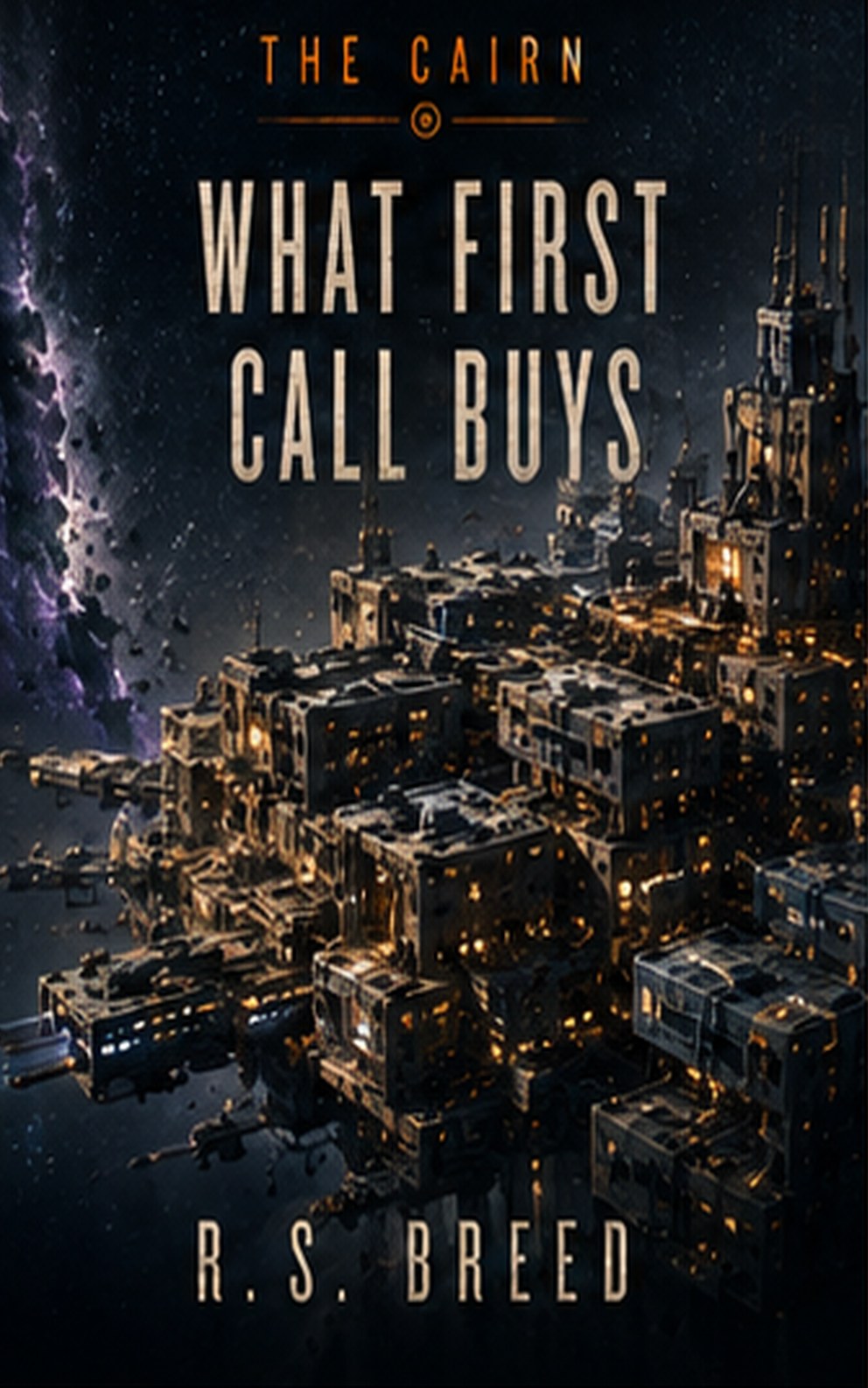
Book Two: What First Call Buys (2322)
The Cairn admitted everyone it promised to admit, could not house them, and bought the steel by selling forward the air, the berths and the ground. Four years on the bill arrives — forty-year leases with first call on everything, three squeezed currents organising into one, and a man who decides the only way to be heard is to break something. Eleven people die, and no single act killed them.
Book Three: Who Gets to Answer (2330)
A family comes home having lived years the station did not, and the records have moved on without them: an estate distributed, a status lapsed, a treatment that cannot wait for the next sailing, a death certified by a process nobody did wrong. One office can authenticate the facts and confer nothing; another can confer status and hear no appeal. What the case forces is not a ruling. It is a government.
Book Four: Who Holds the Standard (2334)
Four minutes of sabotage at the throat takes most of the station's anchor capacity with it, and an inhabited pocket on the far side comes loose. One evacuation corridor can be held, on one serviceable chain, for a finite and stated number of hours. The Cairn defends itself and reaches who it can — and the government it built four years ago finds out whether it can move faster than its own lawfulness allows.
Book Five: What the Station Keeps (2342)
Eight years of quiet, competent emergency rule — an entire native generation has never lived without it — and the authority that has run the station since the attack is finally due to sunset. Then a returning expedition brings proof that a preservation measure could keep the Cairn's own sky viable at a cost that falls on somebody else's, and the founding principle is tested against the people who wrote it. Factions move to preserve, capture or destroy the power to decide, while the first generation born aboard — adults now, split every way their parents were — inherit the station and the argument together. The station belongs to the living.
Each book closes its own story; together they are the record of a place — how a temporary arrangement between governments becomes somewhere people are from, and what it costs to keep it.
A station, not a voyage
Every other series in the Fracture Cosmology follows a ship. This one stays put. The Cairn is the first setting in the universe that outlives its own founders — the crises arrive at the door, the consequences stay in the corridors, and the argument about who gets to decide anything is the plot rather than the background.
Where it stands
The Cairn grew out of the relay at the throat of the road opened in Wide Sky, two years and one treaty later. Readers of that trilogy will recognise the door and what it took to open it. Readers who have never opened a book in this universe need none of it — the station explains itself, and the first novel assumes nothing.